
Coastal Interior Design Guide: A Fresh Take for 2026
Forget seashells and anchors. Modern coastal interior design is about light, texture, and a relaxed feel. We'll show you how to get the look right, from color palettes to furniture choices.
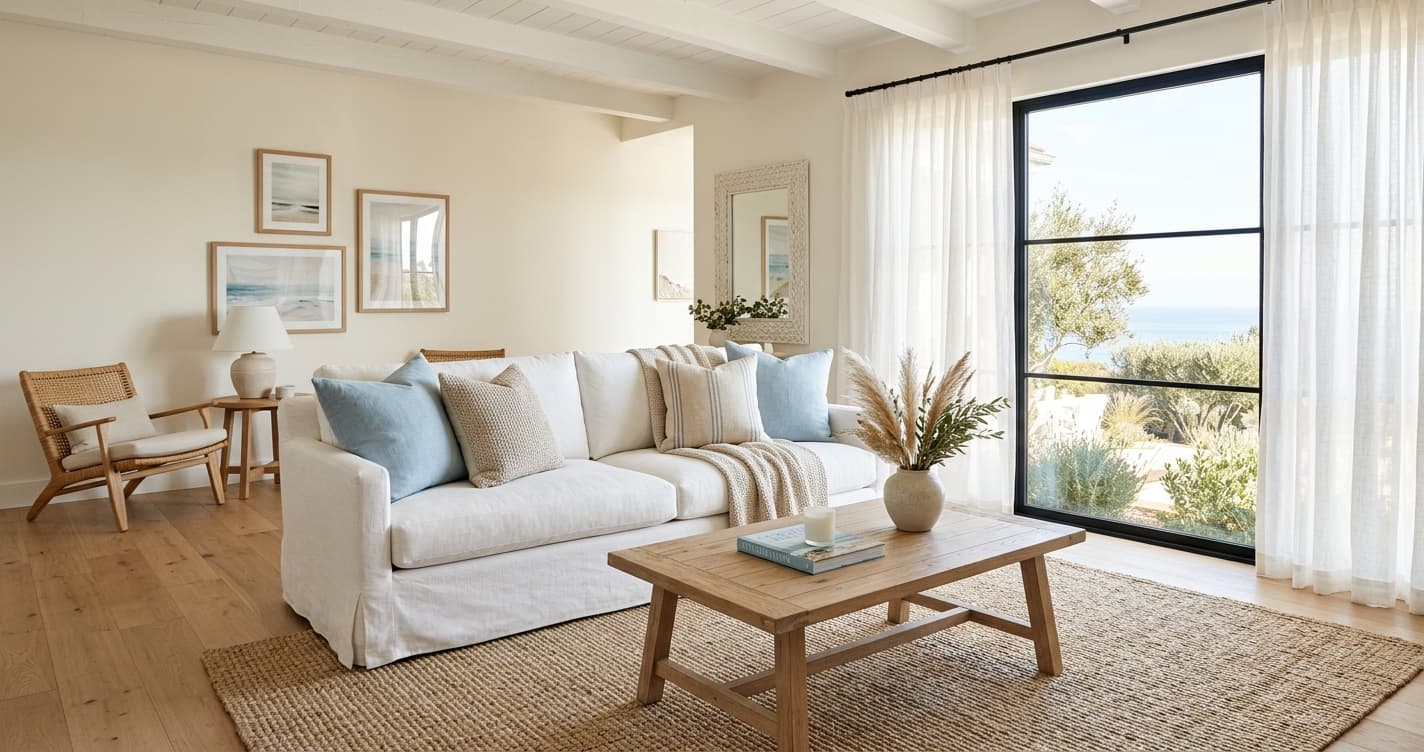
Coastal interior design is often misunderstood. It's not about filling your home with anchor motifs, seashell collections, and signs that say "Life's a Beach." The sophisticated, modern version of this style is less of a theme and more of a feeling. It's about capturing the breezy, relaxed atmosphere of life by the water through light, texture, and a carefully edited color palette.
Getting it right means moving beyond the clichés. The 2026 approach to coastal interior design is subtle, organic, and built on a foundation of natural materials and authentic comfort. We're going to walk you through the core principles, from picking the right shade of white paint to budgeting for a full room redo. This is how you create a space that feels like a permanent, calming escape.
On This Page
The Core Elements of Modern Coastal Design
To achieve a modern look, you need to focus on the essential building blocks of coastal interior design. It all starts with the right colors, materials, and an emphasis on natural light. This foundation sets the stage for everything else.
The Color Palette: Beyond Navy and White
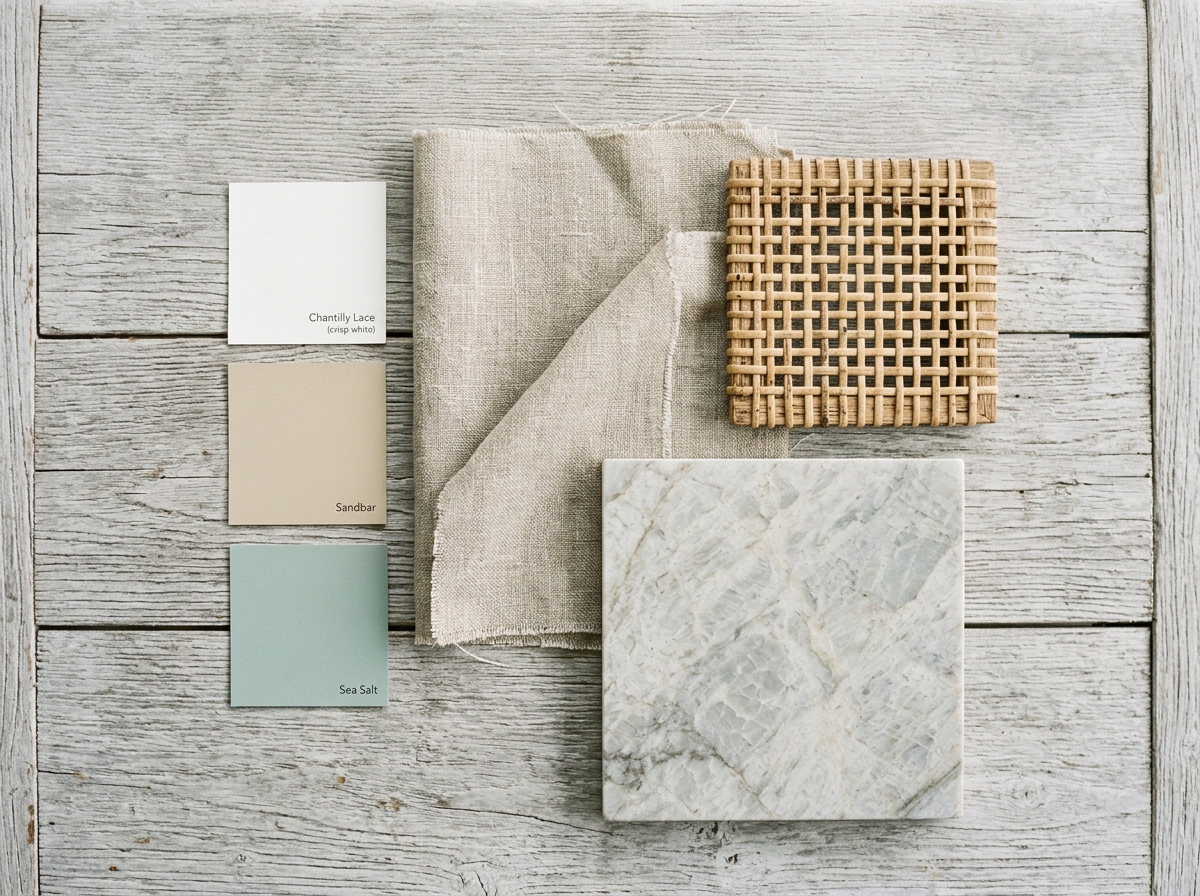
While classic navy and white is a fine starting point, a contemporary coastal palette is softer and more layered. It draws inspiration from sand, sea glass, and hazy morning light. Think less about high-contrast nautical stripes and more about subtle, tonal shifts.
Your base should be a soft, light-reflecting white or off-white. We find that colors like Benjamin Moore's Chantilly Lace or White Dove create a perfect airy backdrop. For warmth, consider sandy beiges like Sherwin-Williams' Accessible Beige. These neutrals prevent the space from feeling cold or stark.
Accent colors should be muted and inspired by nature. We suggest dusty blues like Farrow & Ball's De Nimes, soft seafoam greens, or even the pale blush of a sunset. The goal is to create a serene environment, so use these colors to add depth without overwhelming the senses.
Materials and Textures: The Foundation
Texture is what gives coastal interior design its character and warmth. You want to layer organic materials that feel good to the touch and add visual interest. Start from the ground up with light-toned wood flooring—white oak, maple, or ash are excellent choices. They reflect light and keep the space feeling open.
For furniture, look for pieces made from rattan, wicker, and light-washed woods. These materials add a casual, handmade quality. Textiles are equally important. You can't go wrong with linen, cotton, and jute. Think gauzy linen curtains that billow in the breeze, a comfortable sofa slipcovered in a durable cotton-blend, and a chunky sisal or jute rug to anchor the seating area.
Light is Everything
A true coastal home is flooded with natural light. If you have it, flaunt it. Use sheer, unlined window treatments that provide privacy without blocking the sun. A well-placed mirror can also work wonders, bouncing light around a room and making it feel larger and brighter.
Your artificial lighting plan should be just as thoughtful. We recommend a layered approach. An overhead fixture, like a large woven pendant from a brand like Serena & Lily, provides ambient light. Add task lighting with simple ceramic table lamps and floor lamps. For warmth, choose bulbs in the 2700K to 3000K range to mimic the glow of late afternoon sun.
Selecting Furniture and Decor
Coastal furniture prioritizes comfort and simplicity over ornamentation. Silhouettes should be clean, materials should be natural, and the overall feel should be relaxed and inviting. This is where you can really define the room's character.
Key Furniture Pieces
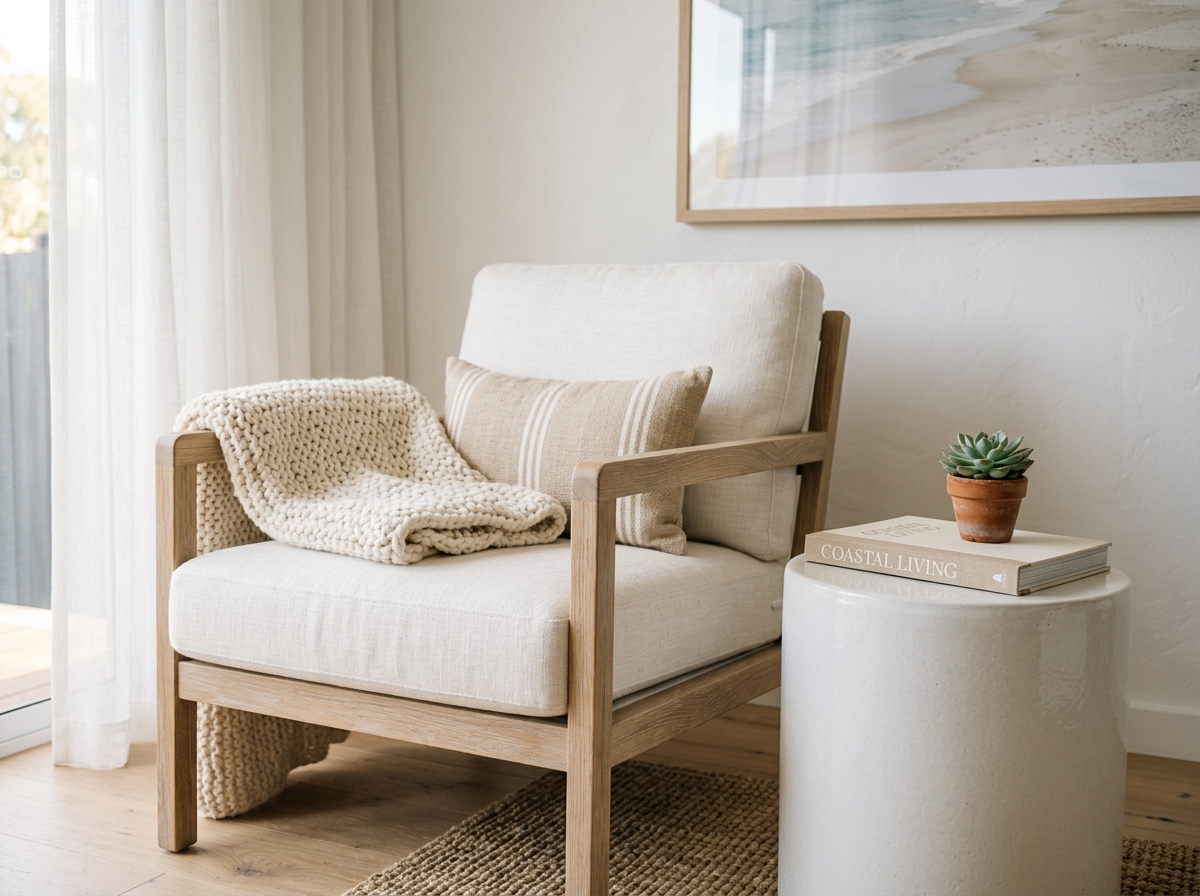
The sofa is often the largest piece in the living room, so it sets the tone. A deep, comfortable sectional with a light-colored slipcover is a hallmark of this style. Slipcovers are practical and lend a casual, unfussy look; look for performance fabrics from brands like Perennials if you're concerned about stains. Pair it with armchairs in natural materials, like a classic rattan wingback or a simple design with a light wood frame.
For tables, think weathered or cerused oak coffee tables and simple side tables. Avoid heavy, dark woods or anything with intricate carvings. The goal is to keep things feeling light and easy. In the bedroom, a bed with a simple upholstered headboard in a neutral linen or a frame made of light wood or rattan continues the theme.
Decor and Accessories: The Finishing Touches
This is where many people go wrong. Successful coastal decor is about suggestion, not literal interpretation. You must resist the urge to buy anything shaped like a ship's wheel or covered in anchor prints. The best coastal accessories feel like they could have been collected over time.
Instead, choose items that evoke the coast's colors and textures. Hang large-scale abstract art with hues of blue and green. Place a single, interesting piece of driftwood on a console table. Group simple ceramic vases in shades of white and sand. Layer pillows with different textures—a chunky knit, a soft linen, a subtle stripe. A large jute or sisal rug ties it all together and feels great underfoot.
Coastal Design in Every Room
These principles can be applied throughout the house, creating a cohesive and calming flow from one space to the next. Each room has an opportunity to interpret the coastal style in a functional way.
The Living Room
This is the heart of the coastal home. Focus on creating an open, conversational layout. Anchor the space with a large, neutral-toned rug. A slipcovered sofa, a pair of comfortable armchairs, and plenty of soft throws invite relaxation. A large woven pendant light can serve as a sculptural focal point.
The Kitchen
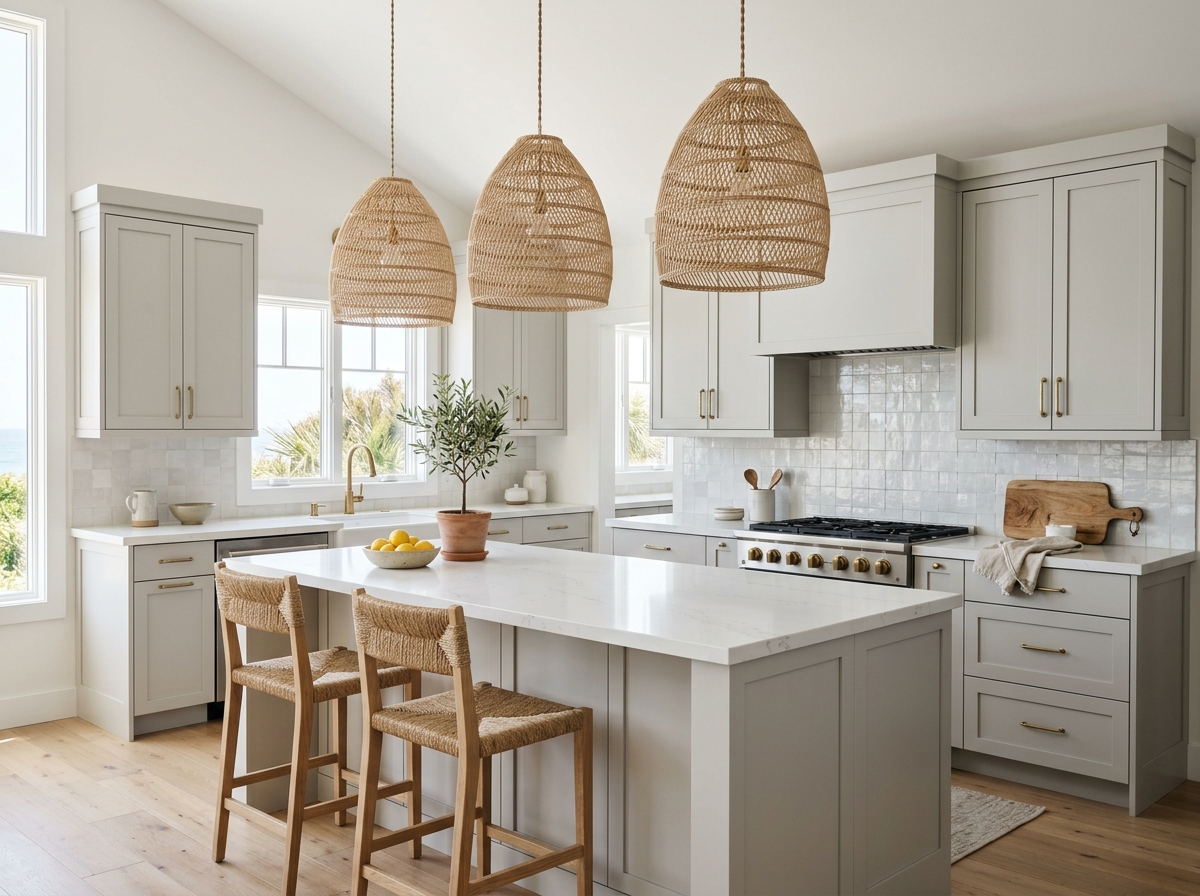
A coastal kitchen should feel clean, bright, and functional. We recommend light-colored cabinets; white, light gray, or greige shaker-style doors are timeless. For a more organic feel, consider rift-sawn white oak. Pair them with countertops in a light quartz or quartzite that has subtle, sandy veining. For the backsplash, a handmade-look tile, like Zellige, adds texture and a perfectly imperfect touch.
The Bedroom
The bedroom should be the ultimate sanctuary. Keep the palette soft and serene. High-quality linen bedding is a worthy investment—it's breathable and gets softer with every wash. Use soft, diffused lighting from bedside lamps with linen shades. Keep clutter to a minimum to maintain a sense of peace and order.
Budgeting for Your Coastal Redesign
The cost of redoing a room in a coastal style can vary dramatically based on the scope of work and the quality of materials. To give you a realistic idea, we've broken down the potential costs for a 250-square-foot living room into three tiers. These numbers are estimates; contractor and material costs fluctuate by region, as noted in reports like the annual Cost vs. Value Report.
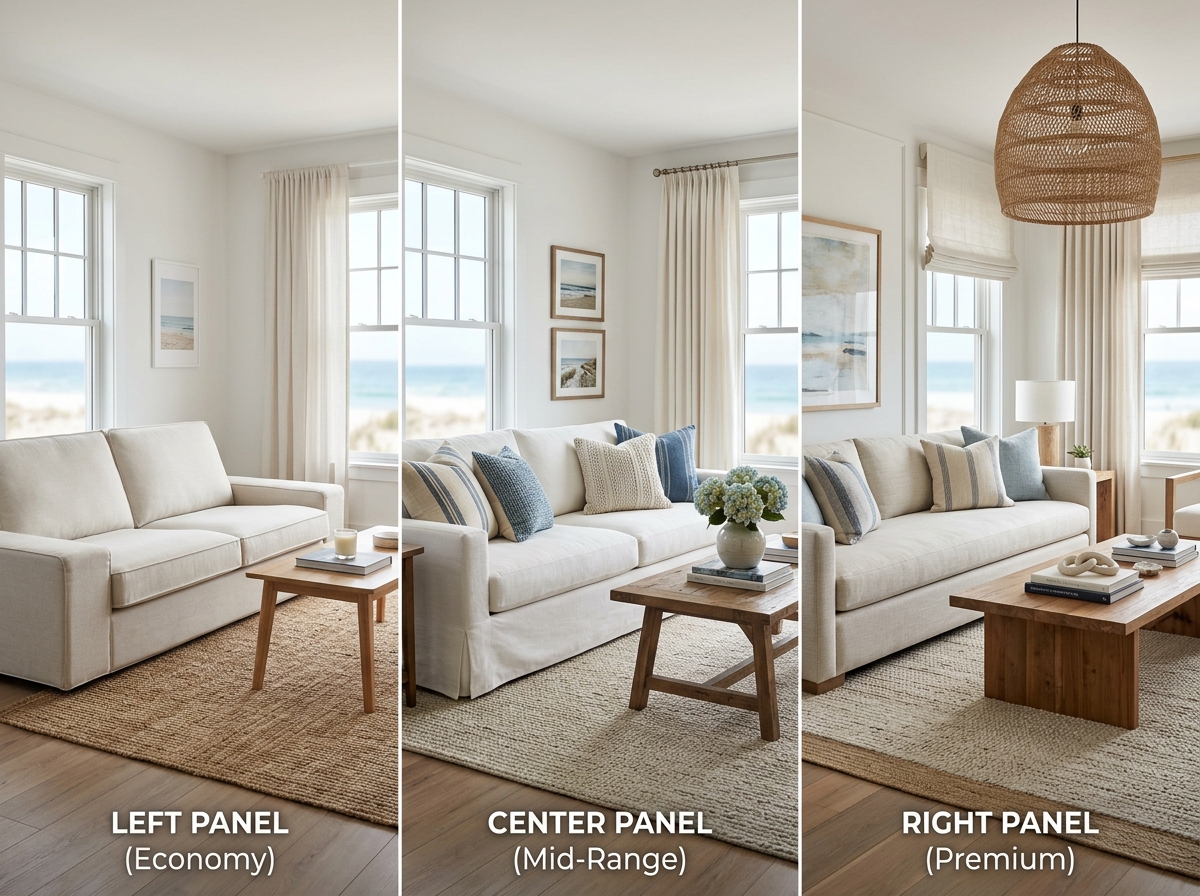
Economy Tier: $3,000 – $7,000
What you get: A significant cosmetic refresh primarily through DIY effort.
Paint: DIY painting with quality paint will run you $300–$500.
Furniture: Focus on affordable retailers like IKEA, Wayfair, and Target. An IKEA Ektorp sofa is a classic slipcovered choice for around $600.
Decor: A large jute rug from a store like Rugs USA might cost $400–$800. Accessorize with finds from HomeGoods, thrift stores, and Facebook Marketplace.
Mid-Range Tier: $8,000 – $20,000
What you get: A more comprehensive update with better-quality furnishings and some professional help.
Labor: Hiring professional painters could cost $1,000–$2,500.
Furniture: Shop at retailers like Pottery Barn, West Elm, or Crate & Barrel. A good-quality slipcovered sofa will be in the $3,000–$5,000 range.
Lighting & Windows: Upgrading lighting fixtures and adding semi-custom linen curtains can cost $2,000–$5,000.
Premium Tier: $25,000+
What you get: A full-scale renovation, often with the help of an interior designer, featuring high-end and custom pieces.
Professional Help: An interior designer's fees can range from 10-20% of the total project budget.
Furniture: High-end brands like Serena & Lily or custom-made furniture. A sofa alone could be $7,000+.
Finishes: This budget allows for refinishing floors, adding custom built-ins, or installing high-end light fixtures from brands like Visual Comfort.
Project Timeline: What to Expect
A successful room redesign doesn't happen overnight. Proper planning is essential to staying on schedule and on budget. Breaking the project into phases makes it manageable. You can use tools like Rendera AI during the planning phase to visualize different furniture layouts and color schemes, which helps prevent costly changes down the road.
Phase 1: Planning and Design (2–6 weeks)
This is the most important phase. Spend this time gathering inspiration, setting your final budget, and measuring your space precisely. Create digital or physical mood boards to solidify your vision. Finalize your paint colors, select key furniture pieces, and create a floor plan.
Phase 2: Sourcing and Ordering (4–12+ weeks)
This phase often takes the longest, primarily due to furniture lead times. It's not uncommon for custom or even semi-custom furniture to take 12 weeks or more to arrive. According to industry supply chain data, lead times can be unpredictable, so order your largest items first. While you wait, you can order smaller items like lighting, rugs, and accessories that have shorter shipping times.
Phase 3: Execution (1–3 weeks)
Once all your major items have arrived, it's time to bring the room to life. This phase includes painting the walls, having an electrician install new light fixtures, and assembling furniture. The final step is arranging everything according to your plan, hanging art, and styling your accessories. If you are renovating to sell, remember that showcasing virtual staging before and after comparisons can significantly boost property sales by helping buyers visualize the potential of the space.
Creating a modern coastal interior design aesthetic is an exercise in restraint. By focusing on a light-filled, neutral foundation and layering in natural textures, you can design a home that feels both sophisticated and genuinely relaxing. It's a timeless style that, when done correctly, will feel like a breath of fresh air for years to come.
The Rendera Team
We're designers, developers, and home improvement enthusiasts building AI tools to help you visualize your dream space.
Learn more about RenderaSee What Your Space Could Look Like
Upload a photo and get AI-powered design ideas in seconds. Free to try.
Try Rendera FreeRelated Articles
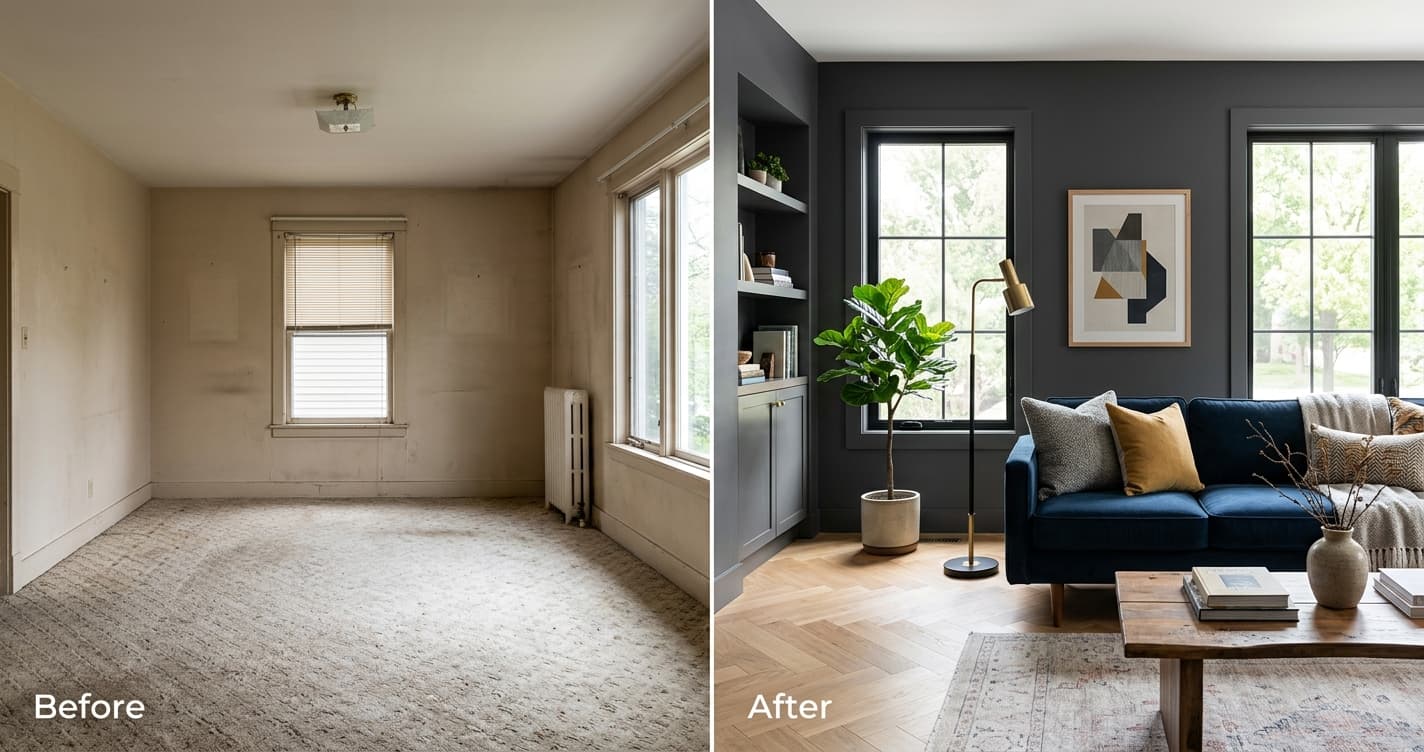
What Is the Best Free AI Interior Design Tool? 2026 Guide
We analyze current AI-driven design platforms to determine which free tools offer the most utility for homeowners planning a home update.
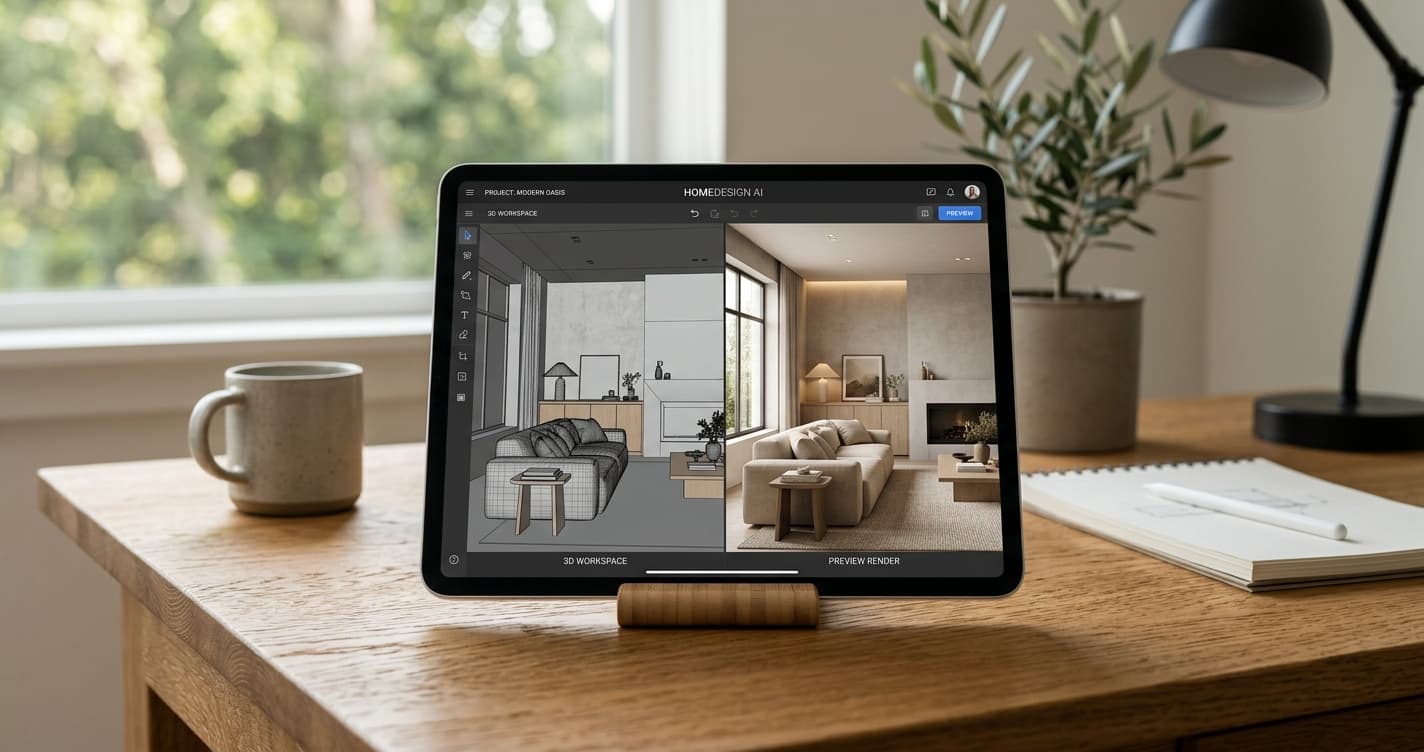
What is the Best Free AI Interior Design Tool? 2026 Guide
Selecting the right AI interior design software requires balancing features with ease of use. We break down the current market for free and accessible design tools.
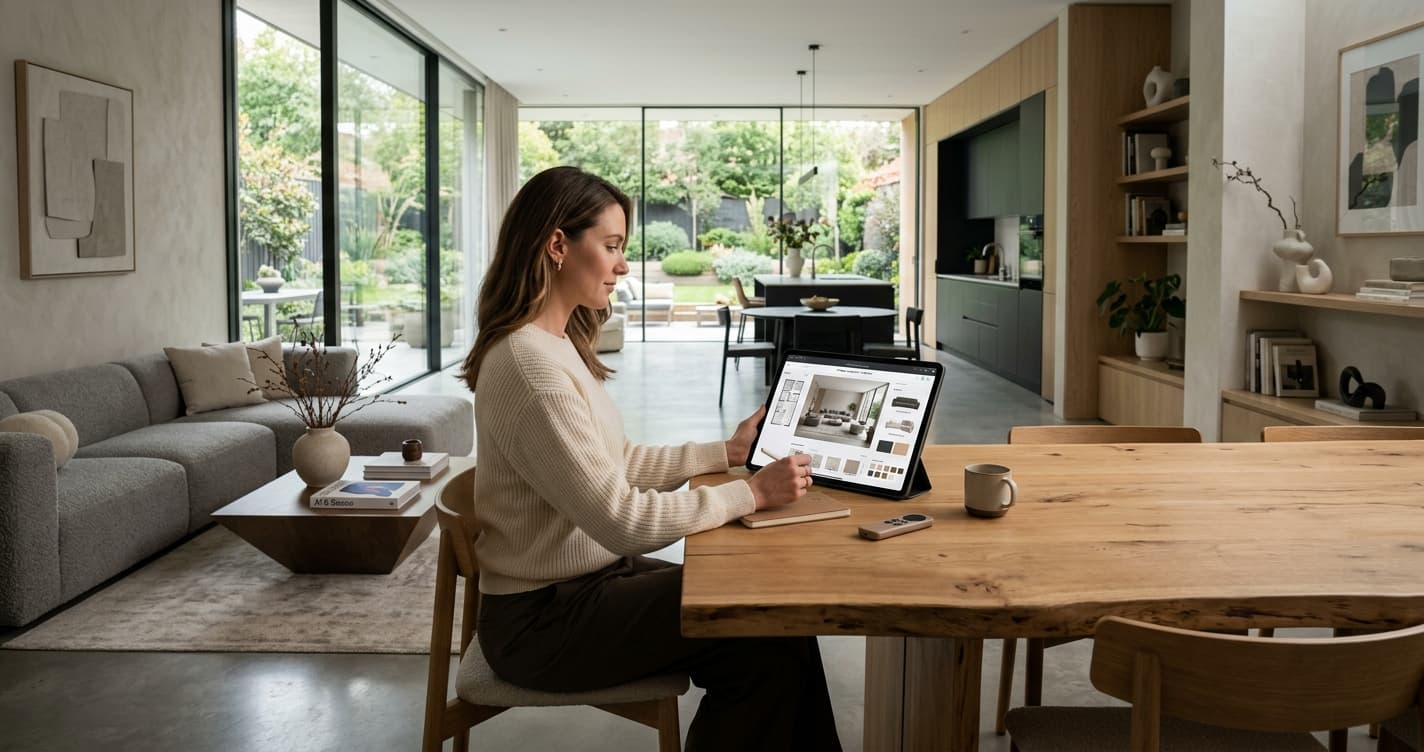
How to Use AI for Interior Design: A 2026 Guide
Ready to rethink your space? Using AI to visualize home design changes is a practical way to avoid costly mistakes before you pick up a paintbrush.